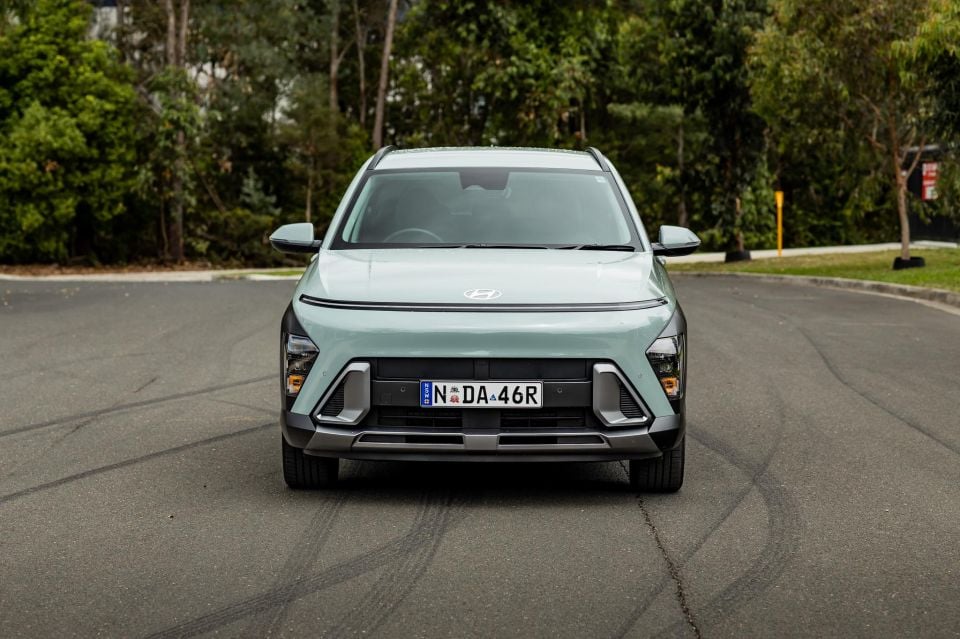
It had been a while since I’d driven the Hyundai Kona Hybrid, and it was an absolute delight to get back into one for a review.
Even better, it was the newly added Kona Hybrid Elite variant, which for under $40,000 plus on-road costs has a pretty decent amount of kit for the cash.
It also delivers a (mostly) likeable drive experience, good fuel consumption, and surprising space, too.
Is it affordable enough, though? Read on to find out and have your say in the comments.
How much does the Hyundai Kona cost?
The Hyundai Kona range has been simplified, with the turbo-petrol option dumped, and the existing non-turbo 2.0-litre MPi engine and this petrol-electric 1.6-litre hybrid now on the books. And it also means there are no all-wheel drive versions of the Kona anymore.
| Model | Price before on-road costs |
|---|---|
| 2026 Hyundai Kona 2.0 | $32,700 (+$200) |
| 2026 Hyundai Kona 2.0 Elite | $35,700 (NEW) |
| 2026 Hyundai Kona Hybrid | $36,700 (+$200) |
| 2026 Hyundai Kona Hybrid Elite | $39,700 (NEW) |
| 2026 Hyundai Kona 2.0 Premium | $41,700 (+$2200) |
| 2026 Hyundai Kona Hybrid Premium | $45,700 (+$2200) |
If you’re curious why those Premium models received such a bump in price, it’s down to the standard inclusion of a sunroof.
Oh, and yes, you can still option the N Line package on the Elite (for an extra $3500) and Premium ($3000), but the base grade can’t be had with it anymore.
To see how the Hyundai Kona lines up against the competition, check out our comparison tool
Let us help you find your new car
Buy your new car without the stress. It’s fast, simple and completely free.

Great service from Travis and team, second time I have used this business would not hesitate to recommend them to anyone
Craig C.
Purchased a Ford Ranger in Sunshine Coast, QLD
CarExpert helped Craig save thousands on his Ford Ranger, now let us save you on your next new car.
Find a deal
What is the Hyundai Kona like on the inside?
There haven’t been any major changes to the cabin treatment for this model range, but the finish and the quality of the materials is all of a very high standard.
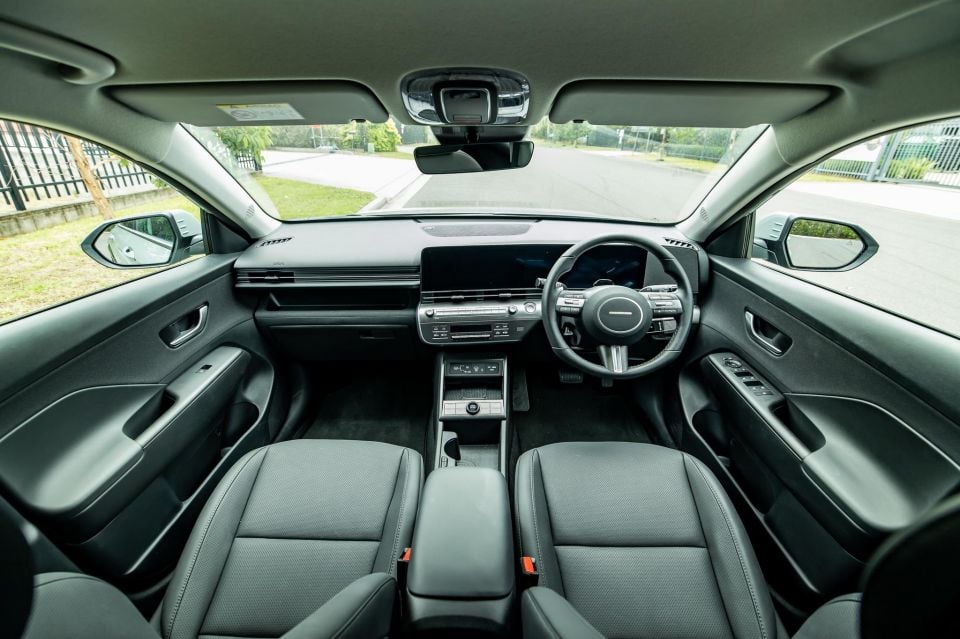
In the Elite there are some great inclusions, such as the perforated leather seat trim and electric adjustment and heating up front .
The materials are good, and so are the controls.
On the steering wheel there are tactile dials and buttons that are very easy to get your head around, though the gear selector poking off the steering column might take a bit more learning. Twist it forwards for Drive, backwards for Reverse, and push the button at the end for Park – and tell me you won’t get that wrong at least once when you’re trying to do a reverse-parallel park in traffic…
The blinker is on the correct side (right!) with the light controls, and the wipers are on the left talk. Yes, there’s a rear wiper, too.

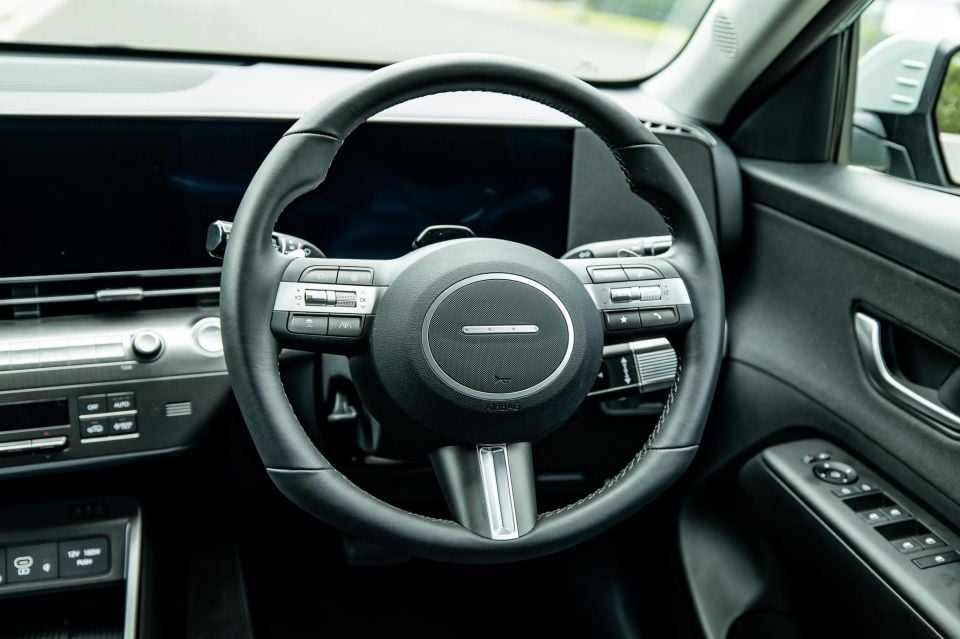
In front of the driver there is also a decent size screen with digital instrumentation including a central colour screen showing trip information and some other details, but the digital-clock-style displays on either side of it look a bit poxy.
The 12.3-inch touchscreen media system with wireless Apple CarPlay and Android Auto is great, and there is sat-nav as well – and plenty of easy functionality to the menus.
Like some other cars that have software as a selling point, this one is a little simpler to learn, and you will find there is a level of ease when it comes to getting to grips with most of the menus on screen.
Most of us will just connect our phone and barely delve deeper, surely… but you will want to get to terms with the safety menus if you don’t like bing-bongs!
The interior also is extremely practical for a small car like this – thankfully the brand hasn’t gone the way of full digital controls, and there are physical buttons and dials below the screen to operate the climate control, seat heating, media management and more.
A wireless phone charger exists in that space as well, as well as a drive mode dial, and behind there is a huge centre console area with adjustable cupholders, so you can move them out of the way if you need just a big flat space.
A covered centre console bin with a removable tray is located between the front seats, and in the doors you’ll find sizeable pockets for bottles and a bit more.
Overhead are illuminated vanity mirrors with adjustable/sliding sun visors (yes!), and there’s an auto-dimming rear-vision mirror, plus an SOS call button for those moments that you need help.
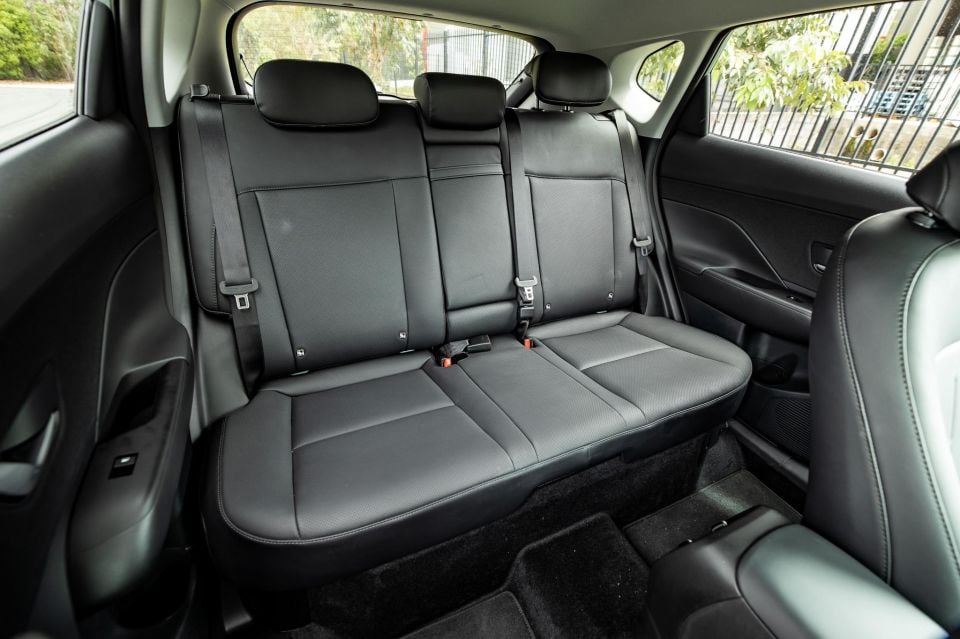
In the second row you will find that there is more space than you probably expect for such a small vehicle, with easily enough room back there for someone 6’0” tall to slide in behind a similarly sized adult with a little bit of space to spare.
There’s no enormous transmission tunnel, but the space will probably be better suited to two rather than three occupants. If you have kiddos there are ISOFIX child seat anchor points for the window seats and three top-tethers, too.
The front seatbacks have mesh map pockets with hard plastic finishes (good for kids that kick), while the doors house decent-sized pockets. Between the seats is a flip-down armrest with cupholders.
Further amenities include a set of USB ports and directional air vents. Nice…
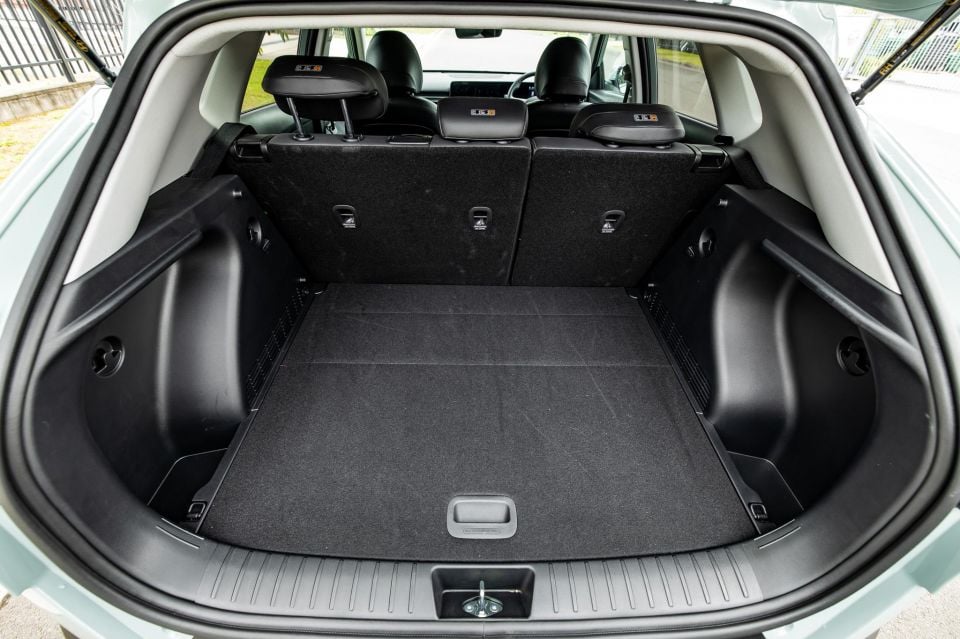
Boot space is class-competitive in the Kona at 407 litres with the rear seats up, and there’s a couple of good inclusions in the boot.
There’s a flat load in space, which is super-helpful for loading in heavy or awkward packages, and beneath that flat floor you’ll find a space-saver spare wheel, which is a nice plus.
At the sides of the boot area, there is a light and multiple shopping bag hooks, which is excellent, and a couple of little small storage nooks. Plus you get a cargo cover! It’s all very clever in terms of space.
| Dimensions | Hyundai Kona |
|---|---|
| Length | 4350mm (4385mm with N Line pack) |
| Width | 1825mm |
| Height | 1585-1590mm |
| Wheelbase | 2660mm |
| Cargo capacity | 407L (rear seats up) 1241L (rear seats folded) |
To see how the Hyundai Kona lines up against the competition, check out our comparison tool
What’s under the bonnet?
The petrol version of the Kona is a decent little operator, but the hybrid is the appealing choice for lots of private buyers who want a fuel-miser. It’s not just light on the juice, though – it has a good amount of grunt!

| Specifications | Hyundai Kona Hybrid Elite |
|---|---|
| Engine | 1.6L 4cyl hybrid |
| Engine outputs | 77kW 144Nm |
| Electric motor outputs | 32kW 170Nm |
| System outputs | 104kW 265Nm |
| Battery | 1.32kWh lithium-ion |
| Transmission | 6-speed dual-clutch auto |
| Drive type | Front-wheel drive |
| Weight | 1410kg |
| Fuel economy (claimed) | 3.9L/100km |
| Fuel economy (as tested) | 4.7L/100km |
| Fuel tank capacity | 38L |
| Fuel requirement | 91-octane regular unleaded |
| CO2 emissions | 88g/km |
| Emissions standard | Euro 5 |
| Braked towing capacity | 1300kg |
There are some headline details there that might ease the mind – it doesn’t need premium fuel, and the claimed efficiency is amazing.
In the real-world? It’s still pretty good. But I didn’t quite get as low as that claimed number, with my week of mixed testing resulting in a displayed average of 4.7L/100km. Still good!
To see how the Hyundai Kona lines up against the competition, check out our comparison tool
How does the Hyundai Kona drive?
I’ve always been a fan of the Hyundai Kona Hybrid, and being reacquainted with it after having driven probably 300 other new cars (SERIOUSLY!), I found it to be a very enjoyable experience.

It might not be as perky or peppy as Hyundai’s larger Tucson and Santa Fe hybrids – they both have turbocharged petrol engines instead of a non-turbo like this Kona – it is still a very urgent and responsive powertrain.
The electric motor assistance is evident from the moment you set off, with a good amount of torque when you need it and smoothness to the experience.
It can drive in fully electric mode in some situations, so you might actually find that it will be silent and smooth in its operation, beyond your expectations.
On longer trips and at high speeds when you might expect petrol-only power, it will still switch between petrol and EV at pace – and you barely even notice it.

The thing about the Hyundai hybrid system is that the electric motor is actually sandwiched into the transmission, so you will end up feeling shifts happen, even in EV mode – which can be a little bit peculiar at first.
It also has an EV-like regenerative braking setup, with different modes to adjust the feel of that experience.
There’s even a single-pedal driving mode that will allow the car to be driven just like an EV by using the left paddle (press and hold and it’ll stop the car for you on regen power). Otherwise, if you set it into Level 3 regen mode it won’t come to a complete stop, it will just slow gradually. In the other modes, it’s even more lenient.
There is a slight effect on the brake pedal feel, as is often the case with hybrid and electrified vehicles. That strange initial pedal progression sensation can be odd if you’re not used to it.

It also has multiple drive modes including Eco, Sport and Snow, and they do have an impact on the powertrain behaviour and also the steering weighting.
Speaking of, the steering is actually delightful. There’s a reassuring level of weight to the steering feel, and it changes direction admirably well.
One thing you might not like about the steering system is the active lane keeping assist, which can intervene by nudging you around in your lane at high speeds in particular. That might get on your nerves, but there is a steering wheel button to turn it off.
The safety systems otherwise are reasonable, although there is a driver monitoring camera system and it will be painful if you don’t like annoying chimes. It is overbearing, and you have to turn it off every single time you drive the car if you don’t like it.
You can mute the speed sign recognition system by holding down the mute button on the steering wheel, which will stop it from binging at you as well.
It’s a charmer to drive. Very good indeed.
To see how the Hyundai Kona lines up against the competition, check out our comparison tool
What do you get?
Okay, here’s the spec rundown to see if the Elite grade is the right pick for you, based on the entire range.
Trusted Reviews, Smarter Choices, Better Prices
Where expert car reviews meet expert car buying – CarExpert gives you trusted advice, personalised service and real savings on your next new car.
2026 Hyundai Kona standard equipment highlights:
- 17-inch alloy wheels (NEW)
- Automatic reflector LED headlights
- Automatic high-beam
- Dark grey roof rails
- Heated, power-folding exterior mirrors
- Proximity entry with push-button start
- Remote start
- 4.2-inch instrument cluster screen
- 12.3-inch touchscreen infotainment system
- Apple CarPlay and Android Auto
- DAB+ digital radio
- Over-the-air updates
- Bluelink connected car services
- Leather-appointed steering wheel
- Leather-wrapped shifter (2.0 only)
- Paddle shifters (Hybrid only)
- Shift by Wire (Hybrid only)
- ‘Open-type’ centre console (Hybrid only)
- Dual-zone climate control with rear air vents
- LED interior lighting
- Fold-down rear armrest
- Height-adjustable front seats
- 2-way driver lumbar adjust
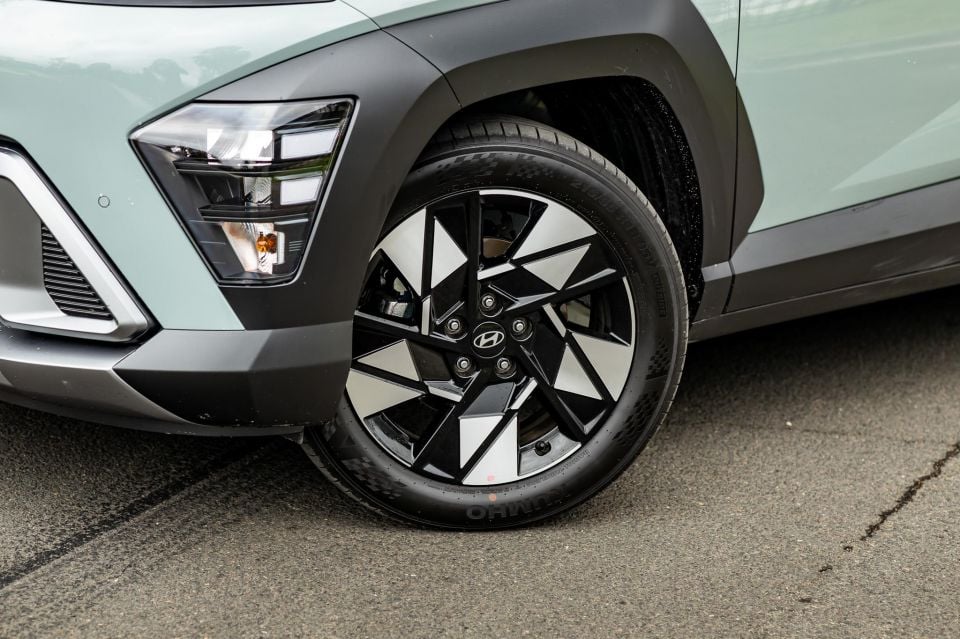
The Kona Elite adds:
- 18-inch alloy wheels
- Rear privacy glass
- Silver-painted skid plates
- Rain-sensing wipers
- Leather upholstery
- Heated front seats
- 10-way power driver’s seat
- 8-way power passenger seat
- Paddle shifters
- Shift by Wire
- ‘Open-type’ centre console
- Elecrochromic rear-view mirror
The Kona Premium adds:
- Remote Smart Parking Assist
- LED indicators
- Full-width front light bar
- Sunroof with power sunshade
- Acoustic laminated/solar windshield
- Power tailgate
- 12.3-inch digital instrument clusters
- Satellite navigation
- 8-speaker Bose sound system
- Ambient lighting
- Cloth headliner
- ‘Premium Relaxation front seats
- Heated and ventilated front seats
- Driver’s seat memory
- Heated outboard rear seats
- Heated steering wheel
To me, the extra $6000 sounds like a big step up to get into the Hybrid Premium variant, but it really is a mega upgrade in terms of spec.
To see how the Hyundai Kona lines up against the competition, check out our comparison tool
Is the Hyundai Kona safe?
I wouldn’t say it’s ‘unsafe’, but it does have a four-star ANCAP rating from 2023.
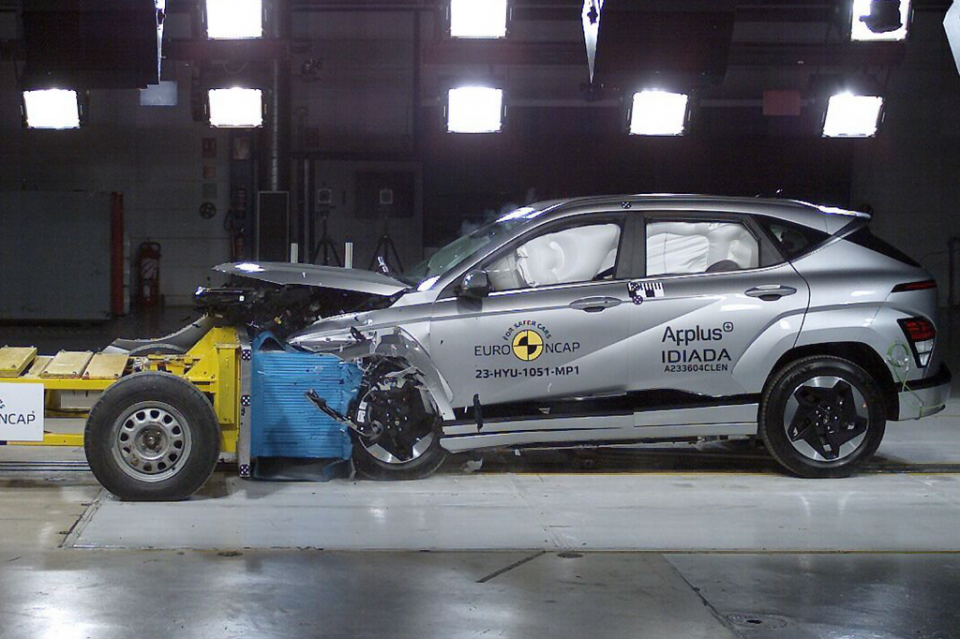
| Category | Hyundai Kona |
|---|---|
| Adult occupant protection | 80 per cent |
| Child occupant protection | 84 per cent |
| Vulnerable road user protection | 64 per cent |
| Safety assist | 62 per cent |
Standard safety equipment across the range includes:
- Adaptive cruise control with stop/go
- Autonomous emergency braking
- Pedestrian detection
- Cyclist detection
- Junction assist
- Blind-spot assist
- Intelligent Speed Limit Assist
- Multi-collision brake
- Rear cross-traffic assist
- Safe exit warning
- Reversing camera
- Front and rear parking sensors
If you want more safety spec, Premium variants upgrades things to a big extent by adding:
- Blind-Spot View Monitor
- Parking Collision Avoidance Assist Reverse
- Surround-view camera
- Side parking sensors
A number of small SUV rivals have a surround-view camera in their $40k variant… some even have the tech in the high-$20k range.
The Kona comes with seven airbags – dual front, front side, a front centre airbag, and curtain coverage for both rows of seats.
To see how the Hyundai Kona lines up against the competition, check out our comparison tool
How much does the Hyundai Kona cost to run?
Hyundai recently added a conditional warranty program to its ownership promise. If you service your new Hyundai with the brand’s network of workshops, you can access a seven-year/unlimited-kilometre warranty plan.

| Servicing and Warranty | Hyundai Kona Hybrid |
|---|---|
| Warranty | 5 years, unlimited kilometres (standard) 7 years, unlimited kilometres (conditional) |
| Roadside assistance | Lifetime (service-activated) |
| Service intervals | 12 months or 15,000km |
| Capped-price servicing | 5 years |
| Average annual service cost | $528 |
| Total capped-price service cost | $2640 |
If not, you still get five years and unlimited kilometres of warranty cover. The hybrid model’s battery pack is covered by an eight-year, 160,000km warranty.
Hyundai is clearly trying to get owners to head back in for maintenance, because there’s also an incentive to keep you servicing in-house: if you do, you’ll get your roadside assistance topped up each time.
Servicing is required every 12 months or 15,000km, and you can either do the capped-price, pay-as-you-go method, averaging about $528 per visit, or you can prepay your servicing for three years ($1560), four years ($2353) or five years ($2977).
To see how the Hyundai Kona lines up against the competition, check out our comparison tool
CarExpert’s Take on the Hyundai Kona
I really like the Hyundai Kona.
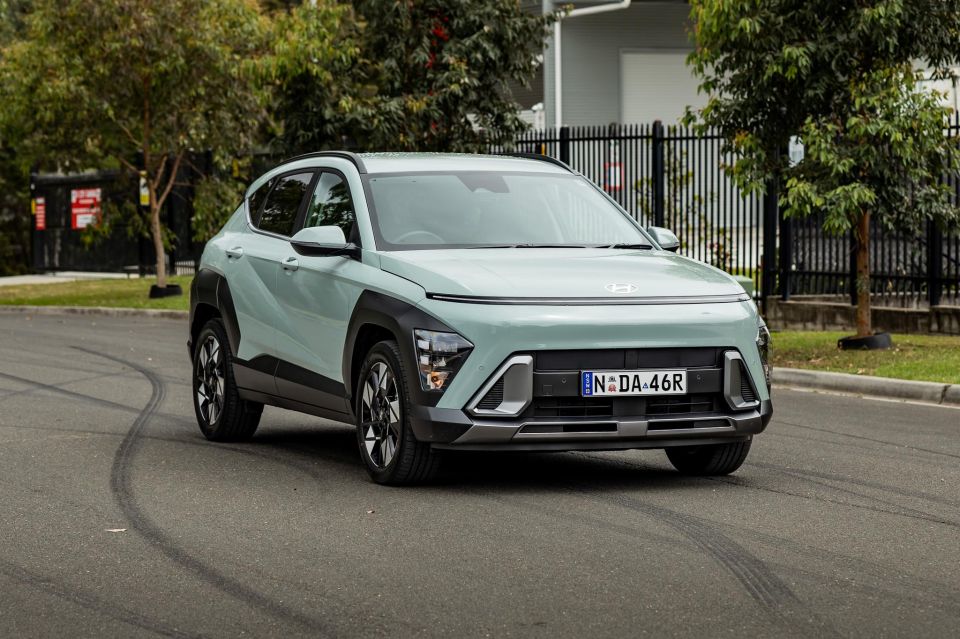
With the hybrid powertrain it’s a likeable and liveable choice, and while I’m not sure the Elite grade is exactly the right price for the standard kit on offer, it does offer a nice mid-point in the lineup.
I’d find it hard not to be upsold into the Premium, though.
CarExpert can save you thousands on a new Hyundai Kona. Click here to get a great deal
Click the images for the full gallery
MORE: Explore the Hyundai Kona showroom
