At the top sits a clock that features physical dials but a digital face, meaning it can also be switched to either a compass or a lap timer. Ferrari claims this was the piece of the cabin that took the most time to develop. Each hand is independently operated by its own three gears.
Instrument binnacle
The incredibly technical digital cluster is made up of eight different layers, of which the front two are separate (and bespoke) Samsung OLED screens. They are used to create a three-dial view: the middle one shows speed (and features a physical needle) and the other two are customisable based on the powertrain settings selected (for example, the left one can show regenerative braking and the right one can show the g-forces being pulled).
The black plastic-looking surface surrounding the dials is actually also an OLED screen that displays warning lights, turn-by-turn navigation and the shifting aid that is normally found at the top of modern Ferrari steering wheels. Why not just put it all on one screen? Ive said having two added more depth and was more interesting.
The binnacle is encased in the same anodised aluminium and is connected to the steering wheel column so both move as one, in an effort to improve visibility.
Center console, key and launch control
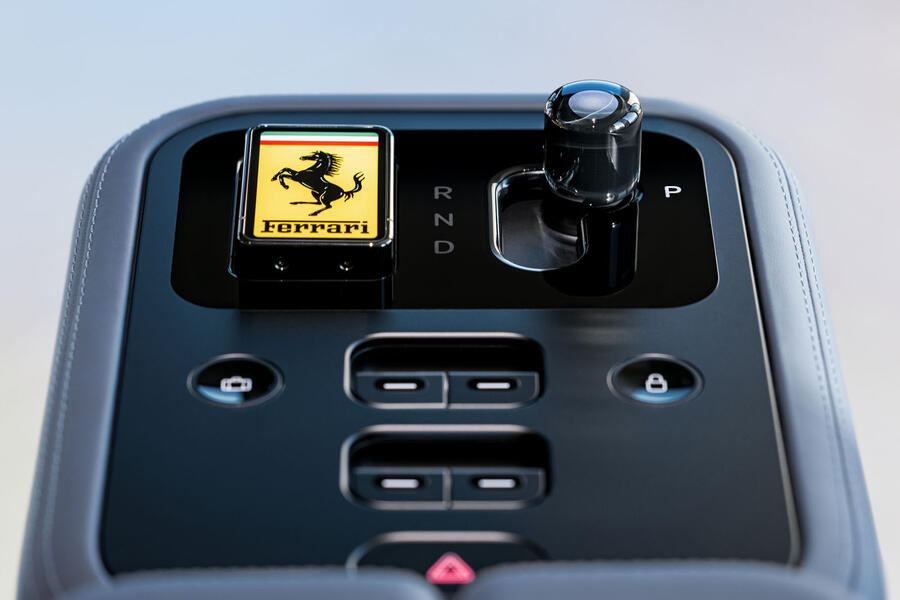
Designed to appear as if floating, the centre console is made up of a mix of leather and glass – the latter in both matt (for the most-used areas, to avoid fingerprints) and glossy finishes.
With an eye on functionality, there are two separate cubbies (one each for the driver and passenger), two cupholders, physical buttons for the boot operation and central locking and switches for all four windows attached to the console.
For rear passengers, a rear touchscreen gives a view of telemetry, such as speed, track time and more.
The key, made of the same aluminium and glass that adorns the rest of the cabin, has its own holder at the front of the console. It needs to be pushed into place for the car to start. The inverted-L-shaped shifter is also made of glass.
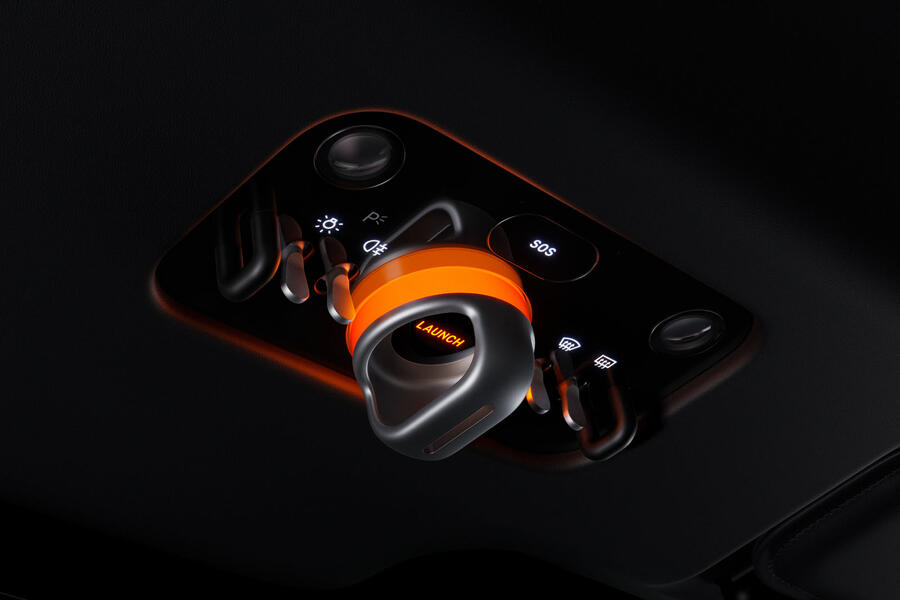
The launch control system is activated by pulling down on a grip that’s located above the driver’s head “like in a helicopter”. It’s flanked by switches that control exterior lighting settings, such as the foglights.
